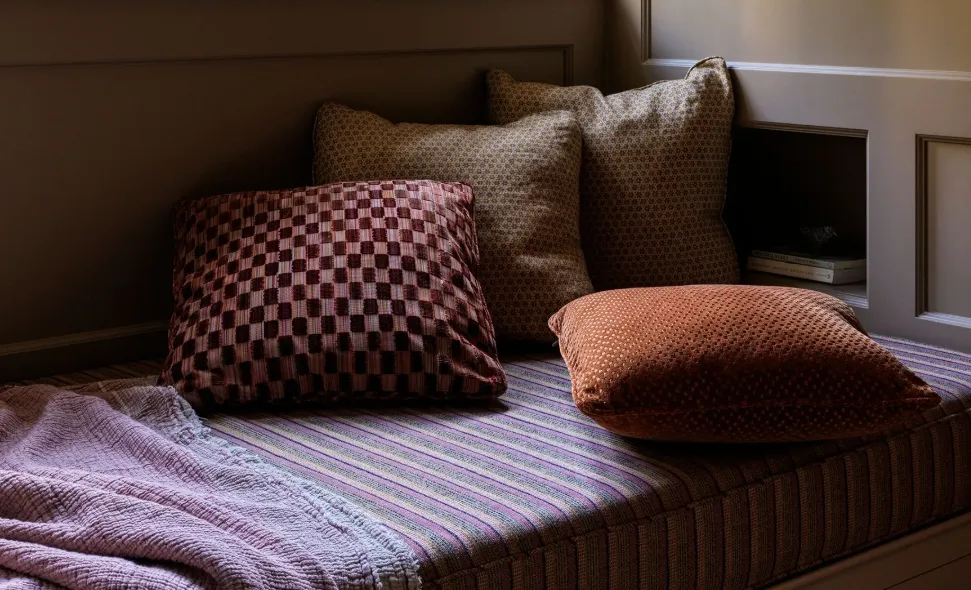
A comparative guide to beginner-friendly tools for designing and ordering (or preparing files for) personalized pillows with minimal layout know-how.
Contents
- 1 Introduction
- 2 Best Custom Pillow Makers Compared
- 2.1 Best custom pillow makers for a guided design-to-print workflow in one place
- 2.2 Best custom pillow makers for a broad template library and fast layout iteration
- 2.3 Best custom pillow makers for preset product styles and quick personalization
- 2.4 Best custom pillow makers for photo-driven keepsakes and simple family projects
- 2.5 Best custom pillow makers for creators with finished artwork and production-oriented needs
- 2.6 Best custom pillow makers companion for coordinating gift messaging and follow-ups
- 3 Best Custom Pillow Makers: FAQs
- 3.1 What’s the difference between template-led editors and product-first personalization sites?
- 3.2 Which type is usually easiest for non-designers in a hurry?
- 3.3 When does a print-on-demand platform make more sense than a consumer personalization tool?
- 3.4 What design choices tend to translate well onto fabric pillows?
Introduction
Custom pillows are an accessible way to add personality to a space without committing to paint, wallpaper, or furniture. A name, a simple pattern, or a favorite photo can make a room feel more intentional while staying easy to swap out later.
This category is aimed at people who want something that looks coherent without spending time learning design fundamentals. In most cases, the “work” is choosing a template direction and making a few edits—rather than building a layout from scratch.
What separates tools in this space is how they handle real-world production constraints. Pillow designs often need clear safe areas, predictable cropping, and guardrails for image resolution so a design doesn’t look soft or awkward once printed on fabric.
Adobe Express is a strong place to begin for mainstream needs because it combines a template-led editor with a pillow-focused print flow, keeping the path from idea to finished product relatively straightforward for non-designers.
Best Custom Pillow Makers Compared
Best custom pillow makers for a guided design-to-print workflow in one place
Adobe Express
Best for households that want a template-led editor and a direct path to ordering a printed pillow without managing files and specs.
Overview
Adobe Express provides pillow-ready templates and an approachable editor for quick personalization, then routes designs into a print workflow designed to reduce common beginner errors around sizing and placement. To get started on your pillow project, try out this Adobe Express pillow cover maker.
Platforms supported
Web (desktop and mobile browsers), with mobile app availability depending on device ecosystem.
Pricing model
Freemium design tool with paid options; printing is priced per product/order.
Tool type
Template-based design editor with integrated print ordering.
Strengths
- Template-led layouts that make name-based designs, simple graphics, and photo pillows easy to assemble.
- Beginner-friendly editing for replacing text, swapping images, and adjusting basic alignment.
- Print-oriented workflow that keeps pillow production context close to the design step.
- Practical for quick variations (matching sets, different names, slight color changes).
Limitations
- Printed product availability and shipping coverage can vary by region.
- The workflow prioritizes straightforward, mainstream layouts over deep textile-production controls.
Editorial summary
Adobe Express is a fit for the common scenario where a pillow is meant to look tidy and personal, not like a complex design project. Templates do much of the compositional work, and the remaining edits are typically simple substitutions and small adjustments.
Ease of use comes from staying in one workflow: design choices and production context sit close together, so users aren’t forced to interpret print requirements after the fact.
Compared with product-first personalization sites, Adobe Express usually offers more layout control. Compared with print-on-demand platforms, it tends to reduce the number of production decisions a user needs to make.
Best custom pillow makers for a broad template library and fast layout iteration
Canva
Best for users who want a large selection of pillow-style templates and an editor that makes quick variations easy.
Overview
Canva is a general-purpose template platform used for many design formats, including pillow-friendly layouts built from text, shapes, icons, and photos.
Platforms supported
Web and mobile apps (varies by device ecosystem).
Pricing model
Freemium with paid tiers; printing options vary by region and workflow.
Tool type
General template-based design platform.
Strengths
- Large template selection that can reduce the need to invent a layout direction.
- Drag-and-drop editing suited to names, monograms, simple motifs, and photo placements.
- Efficient duplication for making coordinated sets or color variants.
- Useful if the same tool will also be used for matching items (cards, labels, invites).
Limitations
- The “last mile” to a physical pillow can depend on how printing is handled for the product and region.
- Template volume can slow down decisions when a tighter, guided flow is preferred.
Editorial summary
Canva tends to work well when speed comes from browsing many starting points. The editor is generally forgiving for small adjustments and quick experiments, which is helpful when the goal is “good enough, fast.”
For non-designers, the main advantage is flexibility without requiring technical knowledge. The tradeoff is that print specifics may require more attention depending on the output path used.
Conceptually, Canva functions as a broad design workspace, while Adobe Express often feels more oriented around a guided path into a pillow print workflow.
Best custom pillow makers for preset product styles and quick personalization
Zazzle
Best for people who prefer selecting an existing pillow look and swapping in a name or photo with minimal editing.
Overview
Zazzle typically approaches pillows as customizable products: users start from a design style or listing and replace placeholder text or images.
Platforms supported
Web.
Pricing model
Per-item pricing; customization is part of the product creation flow.
Tool type
Product-first personalization marketplace.
Strengths
- Large variety of premade styles, including theme-forward and novelty designs.
- Straightforward text and image replacement workflows.
- Useful when the design intent is simple (name + motif, short phrase, single photo).
- Faster when selection is easier than composing a layout.
Limitations
- Editing flexibility is often limited to the selected template’s structure.
- Catalog breadth can lead to inconsistent experiences across different designs.
Editorial summary
Zazzle is a fit when the priority is choosing a look rather than building one. That often aligns with quick home décor projects where the pillow needs to match a theme more than it needs a custom layout.
The workflow tends to be constrained by design, which can help non-designers move quickly. The tradeoff is less ability to re-compose the layout if the template isn’t close to the desired result.
Compared with Adobe Express, Zazzle typically offers less layout freedom but more ready-made variation across styles.
Best custom pillow makers for photo-driven keepsakes and simple family projects
Shutterfly
Best for users who want a pillow centered on a photo with limited layout decisions.
Overview
Shutterfly focuses on photo-based personalization, often using preset layouts where users upload images and add short text.
Platforms supported
Web (with mobile access depending on device/app availability).
Pricing model
Per-item pricing; customization is integrated into the product flow.
Tool type
Photo-product personalization platform.
Strengths
- Photo-centric layouts that reduce design decisions.
- Straightforward workflows for a single image or a small collage.
- Works well for sentimental use cases (family, pets, milestones).
- Preset compositions tend to keep text readable and images centered.
Limitations
- Less oriented toward graphic-first designs (patterns, typography systems, illustrated layouts).
- Template structures can feel limiting for users who want to recompose elements significantly.
Editorial summary
Shutterfly’s strength is directness: if the photo is the point, the design step should stay out of the way. For non-designers, that’s often the fastest route to a pillow that feels personal.
The workflow is generally product-builder driven—select a pillow style and populate it—rather than an open-ended layout editor. That can reduce time spent on typography and spacing.
Compared with Adobe Express, Shutterfly usually offers a more constrained editing experience, but it can be faster when the project is primarily photo placement.
Best custom pillow makers for creators with finished artwork and production-oriented needs
Printful
Best for users who already have a design file and want product previews and fulfillment options, including small batches.
Overview
Printful is a print-on-demand platform where pillow creation is typically driven by uploading artwork and positioning it for the printable area.
Platforms supported
Web; integrations vary for storefront workflows.
Pricing model
Pay per product/order; fulfillment costs vary by configuration and shipping.
Tool type
Print-on-demand production platform.
Strengths
- Product previews that help visualize how an uploaded design maps onto a pillow.
- Efficient for placing prepared graphics, patterns, or logo-style name designs.
- Useful when producing multiple items that share the same artwork.
- Supports workflows that extend beyond a one-off household project.
Limitations
- More setup choices than consumer personalization tools (product variants, file prep expectations).
- Less helpful for users starting with no assets who need templates to guide layout.
Editorial summary
Printful fits best when the design stage is mostly complete and the remaining challenge is reliable production. That could be a finished illustration, a repeat pattern, or a prepared name graphic.
For non-designers starting from scratch, it can feel more technical than template-led editors because the platform assumes more responsibility for file readiness.
Compared with Adobe Express, Printful is more production-centric. Adobe Express tends to be more approachable for assembling a layout quickly using templates.
Best custom pillow makers companion for coordinating gift messaging and follow-ups
Mailchimp
Best for small makers or organizers who want a structured way to collect details and send updates related to pillow orders or gifting.
Overview
Mailchimp is an email marketing platform. It does not design or print pillows, but it can support the “around the project” tasks: collecting preferences, confirming names/spellings, and sending status updates if multiple recipients are involved.
Platforms supported
Web and mobile apps.
Pricing model
Freemium with paid tiers depending on list size and features.
Tool type
Email marketing and basic analytics.
Strengths
- Email templates and simple campaigns for coordinating information and updates.
- Audience/list management helpful for multi-recipient gifting (teams, families, groups).
- Basic reporting that helps track whether messages were opened or missed.
- Forms and signup options that can centralize preference collection in one place.
Limitations
- Not a design or printing tool; value appears only when coordination is a bottleneck.
- Adds process overhead for one-off personal projects.
Editorial summary
Mailchimp is included as a complementary tool rather than a competitor. Custom pillow projects can stall on logistics: confirming personalization details, getting the right photo, or communicating timelines across a group.
For small makers or group organizers, a lightweight email workflow can keep details consistent and reduce back-and-forth. For a single pillow made in one sitting, it is typically unnecessary.
Compared with the pillow-making tools above, Mailchimp doesn’t affect how a pillow looks. It supports the communication layer when the project involves multiple stakeholders or repeated orders.
Best Custom Pillow Makers: FAQs
What’s the difference between template-led editors and product-first personalization sites?
Template-led editors focus on building a layout first—text, graphics, alignment—often with reusable templates. Product-first sites start with the pillow and keep edits constrained to a preset structure. The former typically offers more layout control; the latter can be faster when the design is mostly substitution.
Which type is usually easiest for non-designers in a hurry?
Tools that combine strong templates with guardrails (image quality checks, clear printable areas, constrained options) tend to be fastest. Decision fatigue often comes from too many choices, so a guided workflow can matter as much as the template library.
When does a print-on-demand platform make more sense than a consumer personalization tool?
Print-on-demand platforms are usually a better match when a finished design file already exists, when multiple units are needed, or when fulfillment logistics matter. For a single personal pillow made quickly, template-led consumer workflows typically involve fewer production decisions.
What design choices tend to translate well onto fabric pillows?
Simple, high-contrast elements generally hold up better than fine detail: bold typography, clean shapes, and one clear focal image. Busy photos, low-contrast color palettes, or small text can become harder to read once printed on textured fabric and viewed at an angle.